Fast-growing B2B SaaS companies eventually hit the same wall: the website no longer matches the maturity of the product, the sophistication of the buyer, or the velocity of the go-to-market engine. What worked in Seed or Series A becomes a blocker by Series B, C, and beyond.
Buyers expect clarity.
Marketing needs flexibility.
Sales wants alignment.
Leadership wants growth.
And the website becomes the single most powerful — and often the single most underperforming — lever for conversion.
This is why companies invest in B2B SaaS Conversion Design: a specialized discipline that blends messaging, UX, UI, psychology, and product storytelling to create websites that don’t just look good, but generate pipeline and revenue predictably.
Below is the definitive guide.
1. Why Conversion Design Is Critical for B2B SaaS Growth
1.1 SaaS Buyers Are Overwhelmed — You Must Cut Through Noise
Your buyers evaluate:
-
multiple tools
-
overlapping categories
-
AI-driven features
-
new competitive entrants
-
crowded messaging environments
Conversion design ensures your value is instantly clear.
1.2 Your Product Has Evolved — Your Website Hasn’t
Fast-growing SaaS companies experience:
-
new workflows
-
expanded features
-
multi-persona buying
-
enterprise readiness
-
deeper integrations
-
new pricing mechanics
If the website still reflects the early MVP story, conversion drops.
1.3 Every GTM Motion Depends on Conversion
Conversion design impacts:
-
paid acquisition
-
ABM campaigns
-
SEO performance
-
email nurture
-
outbound (SDR → website handoff)
-
partner traffic
-
analyst evaluations
-
customer onboarding
When the website performs, every channel performs.
1.4 SaaS Products Require Visual, Narrative Explanation
B2B SaaS products are:
-
complex
-
multi-step
-
workflow-driven
-
integration-heavy
-
often hidden behind dashboards
Conversion design turns complexity into:
-
clean visuals
-
digestible workflows
-
animated product stories
-
modular feature narratives
-
outcome-driven value propositions
This improves buyer understanding — which increases conversion.
1.5 Growth Teams Need Speed, Tests, and Templates
Fast-growing SaaS marketing requires:
-
rapid landing page creation
-
quick experiments
-
scaling PPC
-
ICP-specific funnels
-
product launch pages
-
conversion improvements monthly
Conversion design builds systems, not one-off pages.
2. What B2B SaaS Conversion Design Actually Is
Conversion design is the intersection of strategy, UX, messaging, UI, product storytelling, and psychology.
It is not:
✘ visual design alone
✘ copywriting alone
✘ UX wireframes alone
It is the integrated system that makes a website convert.
The components:
2.1 Value Proposition & Messaging Architecture
You must answer in seconds:
-
What do you do?
-
Why does it matter?
-
How is it different?
-
Who is it for?
-
What outcomes can be expected?
Conversion messaging cuts through noise and increases comprehension.
2.2 ICP-Specific Storytelling
Most SaaS teams sell to:
-
decision-makers
-
operators
-
technical buyers
-
champions
-
procurement
Each group needs a tailored message path.
Conversion design builds pages and flows for each ICP.
2.3 Narrative-Driven Information Architecture
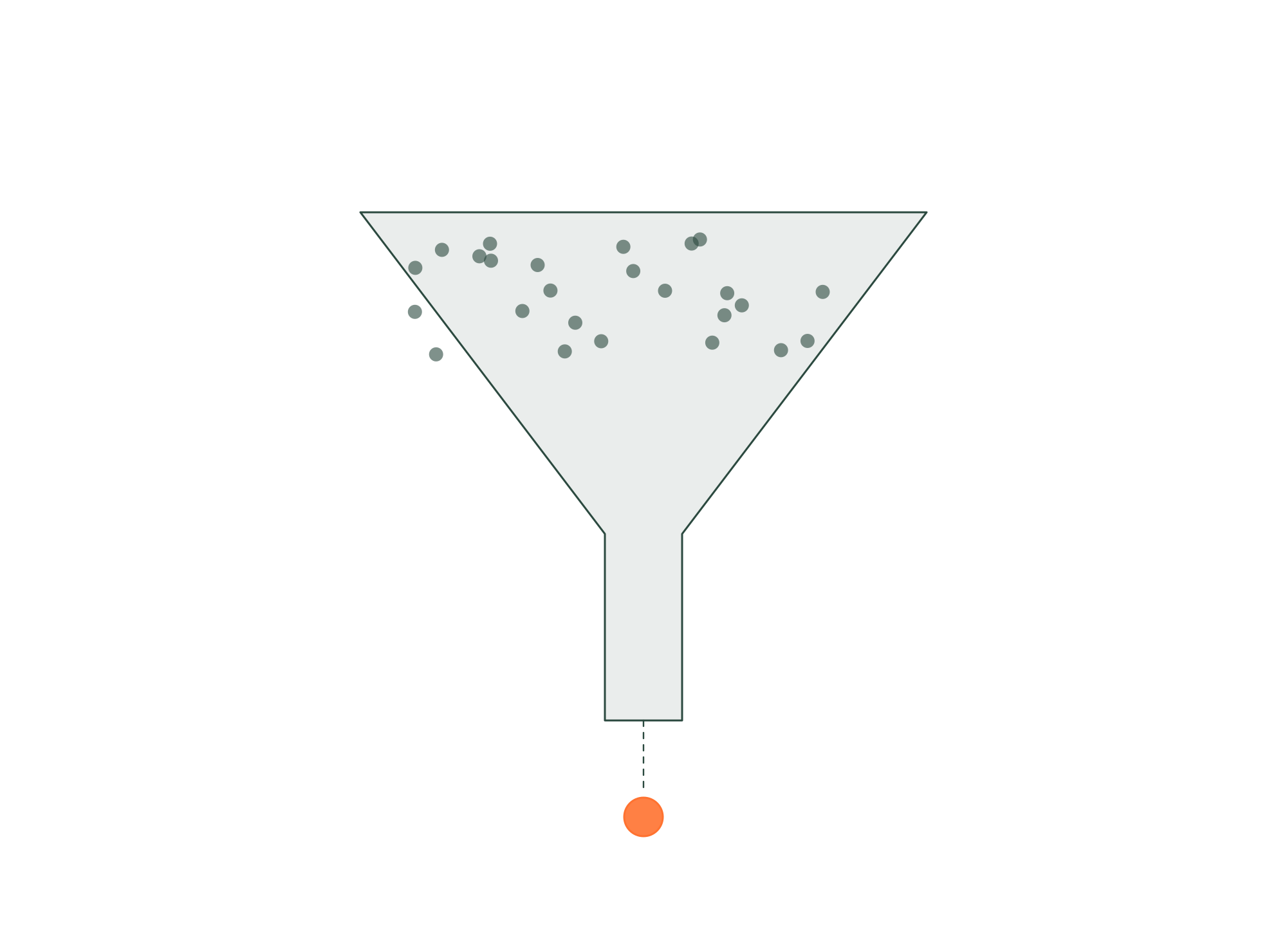
The sitemap becomes a funnel:
-
product
-
solutions
-
industries
-
features
-
workflows
-
integrations
-
proof
-
pricing
-
CTAs
Every click moves the buyer closer to action.
2.4 UX Engineered for Decision Psychology
High-converting UX includes:
-
clean sequencing
-
scannable sections
-
friction removal
-
repeated proof
-
CTA placement
-
mobile optimization
-
pattern consistency
It mirrors how SaaS buyers think.
2.5 High-Impact UI & Modern Visual Systems
Premium UI communicates:
-
trust
-
maturity
-
enterprise readiness
-
category authority
This is especially important for SaaS companies selling to mid-market + enterprise.
2.6 Product UI Storytelling
This is where SaaS conversion design shines.
Your product must be shown, not hidden.
We use:
-
dashboard mockups
-
workflow diagrams
-
motion sequences
-
“how it works” animations
-
integration ecosystem visuals
-
feature → outcome mapping
When buyers understand the product, they convert.
2.7 Proof Architecture That Reduces Risk
Proof is not optional for B2B SaaS.
Conversion design integrates:
-
customer logos
-
testimonials
-
quantified ROI
-
case studies
-
comparison tables
-
third-party badges
-
security + compliance
Buyers move when risk is removed.
2.8 CTA Systems Aligned to Funnel Stage
Conversion design uses:
-
top-of-funnel CTAs (“See it in action”)
-
mid-funnel CTAs (“Explore workflows”)
-
bottom-funnel CTAs (“Book demo”)
-
resource CTAs
-
product tours
-
alternative pathways
CTAs are a system — not a button.
3. The B2B SaaS Conversion Design Process
Fast-growing teams use a structured, repeatable model:
Phase 1 — Discovery & Research
-
ICP analysis
-
competitive messaging
-
product deep dive
-
funnel performance
-
analytics review
-
category understanding
Outcome: clarity on what the site must communicate.
Phase 2 — Messaging Strategy
-
value prop
-
differentiation
-
narrative hierarchy
-
ICP messaging
-
product → outcome mapping
-
proof layering
Outcome: the messaging backbone.
Phase 3 — UX Architecture
-
sitemap
-
navigation paths
-
section structures
-
conversion flow
-
CTA mapping
Outcome: a strategic UX foundation.
Phase 4 — High-Fidelity UI & Product Storytelling
-
visual design system
-
premium UI
-
product visualizations
-
diagrams
-
workflows
-
motion/design interactions
Outcome: a polished, enterprise-ready experience.
Phase 5 — Development & Optimization
Built in:
-
Framer (fastest)
-
Webflow
-
Next.js
Includes:
-
CMS structure
-
SEO
-
performance
-
conversion testing hooks
-
analytics
-
mobile-first responsiveness
Outcome: a conversion engine, not a brochure.
Phase 6 — Continuous CRO Iteration
After launch:
-
headline tests
-
CTA tests
-
proof repositioning
-
landing page expansion
-
ICP funnels
-
SEO growth
-
UX refinement
Outcome: conversion increases every month.
4. Why Fast-Growing SaaS Teams Choose Conversion Design
4.1 More demos, trials & qualified pipeline
Clarity + proof → higher action.
4.2 Better lead quality
Messaging filters out weak prospects.
4.3 Shorter sales cycles
Buyers arrive educated and confident.
4.4 Stronger competitive positioning
Narrative and UI communicate category leadership.
4.5 Higher performance across paid channels
Landing pages convert more efficiently → CAC drops.
4.6 Faster GTM execution
Teams ship faster with templates & systems.
4.7 Stronger investor perception
Your website signals maturity, momentum, and clarity.
5. What to Look for in a Conversion Design Partner
Must-have capabilities
✔ deep SaaS product understanding
✔ conversion psychology
✔ messaging + UX strength
✔ product UI storytelling expertise
✔ premium visual design
✔ technical build quality
✔ fast experiment cycles
✔ ability to scale pages quickly
Red flags
✘ visuals without strategy
✘ generic SaaS language
✘ no ICP segmentation
✘ no product comprehension
✘ template thinking
✘ lack of proof strategy
✘ slow delivery cadence
Fast-growing teams need hybrid strategists, not decorators.
6. Conclusion: Conversion Design Is the Growth Multiplier for SaaS
When your website delivers clarity + proof + ease-of-understanding + product storytelling + premium UI, it becomes the single most powerful contributor to pipeline and revenue.
B2B SaaS Conversion Design enables:
-
higher-quality inbound
-
more demo requests
-
faster conversions
-
better sales conversations
-
stronger differentiation
-
increased trust with enterprise buyers
-
lower CAC
-
sustainable growth
For fast-growing SaaS teams, conversion design isn’t a luxury —
it’s the most leveraged investment you can make.